


1. What Causes Gas and Bubbles in Honey?
Seeing bubbles or hearing a hiss of gas when opening a honey jar often causes confusion. To evaluate the quality of your honey accurately, you must distinguish between physical aeration and biological fermentation.
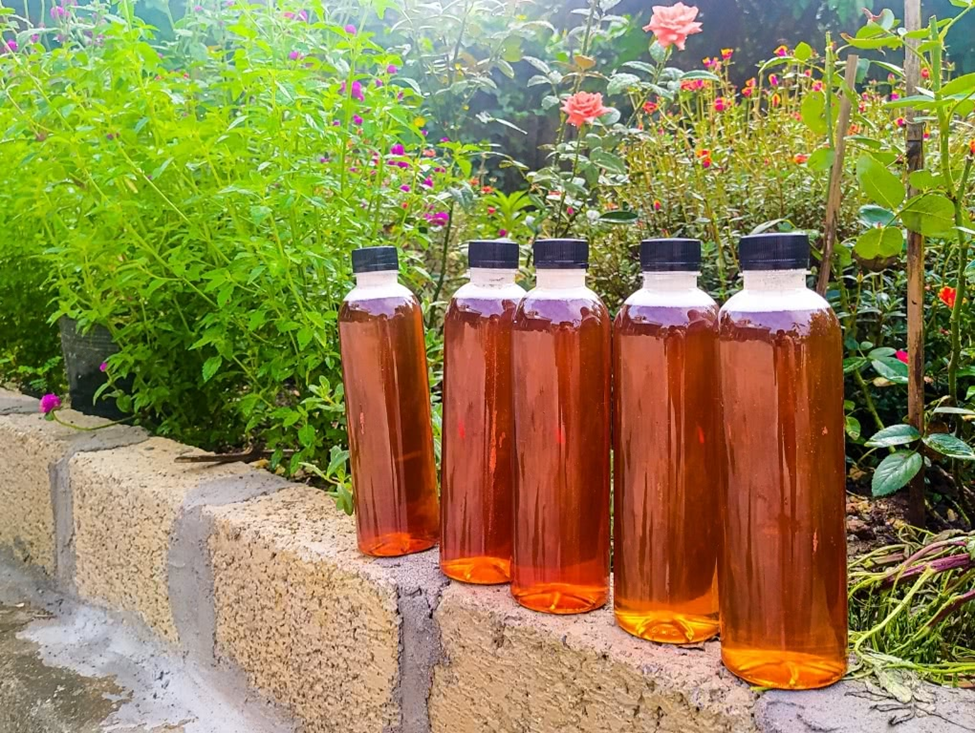
Honey with gas and bubbles is a natural phenomenon and commonly occurs
1.1. Physical Aeration: Mechanical Agitation & Pouring (Harmless)
- Cause: Honey is a highly viscous, supersaturated sugar solution. During harvesting, extraction, bottling, or transportation, ambient air becomes trapped within the thick liquid. Pouring honey or shaking the container introduces tiny air pockets that rise slowly due to honey's high density.
- Symptom: A thin layer of fine, static micro-bubbles gathers at the top neck or surface. The jar shows no pressure buildup, no bulging, and no hiss when opened. Most importantly, the aroma remains sweet and floral, and the flavor is completely unchanged.
- Safety & Handling: This is a purely physical phenomenon and is 100% safe. Leaving the jar undisturbed at room temperature (21°C – 26°C) for several hours allows trapped air to dissipate naturally.
1.2. Microbial Fermentation: Osmophilic Yeast Activity (Food Spoilage)
- Cause: Raw honey naturally contains dormant osmophilic yeasts (Zygosaccharomyces rouxii). When honey's water content exceeds 19% – 20% (due to premature harvesting or improper open storage in humid climates), water activity (aw) rises above 0.60. At this threshold, osmophilic yeasts activate and feed on glucose and fructose: Glucose → 2 Ethanol + 2 CO2↑ (via Yeast) Under warm conditions, ethanol further oxidizes into acetic acid (vinegar) and water. The released carbon dioxide gas (CO2) creates internal pressure and continuous fizzing.
- Symptom: Persistent, expanding froth across the surface; continuous streams of gas bubbles rising from the bottom; bulging plastic containers or audible gas release when opening; a distinct, sharp sour odor of vinegar or sour wine; and a loose, watery, separated texture.
- Safety & Handling: Fermented honey has lost its quality grade according to international food standards. It should be discarded.
2. Debunking the Myth: Is Honey with Gas a Sign of Genuine Honey?
A widespread folk myth suggests that "if honey fizzes and builds up gas, it must be genuine, wild honey." From a food technology perspective, this claim is false and misleading.
2.1. Why Did This Myth Originate?
Traditionally, honey hunters harvested wild honeycombs containing unripe honey, bee larvae, and pollen without moisture reduction facilities. Because wild honey often had high moisture levels (22% – 25%), it fermented rapidly during storage, producing foam and popping bottle caps. Consumers mistook this spoilage symptom for "raw biological liveliness."
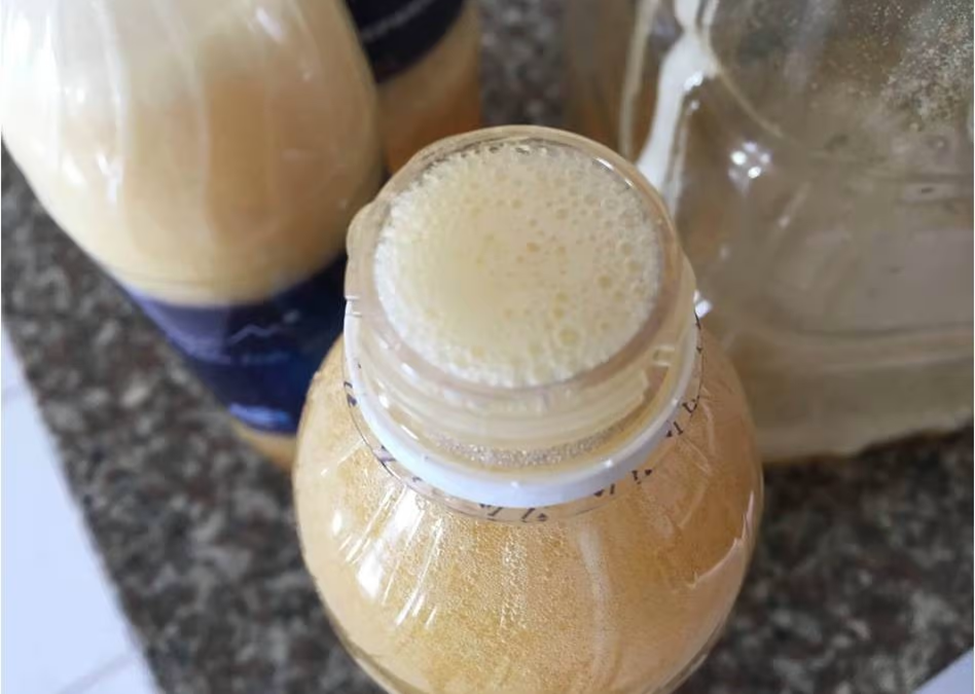
The cause of gas and bubbles in honey
2.2. The Scientific Reality
- Pure Ripe Honey Does Not Ferment: When honeybees fully ripen nectar in the comb and seal it with beeswax cappings, moisture drops below 18.5%. At this high osmotic pressure, bacteria and yeasts are completely dehydrated and inactive. Ripe, genuine honey remains stable for years without producing gas.
- Gas Indicates High Water Content, Not Purity: Active gas indicates either premature harvesting (unripe honey) or moisture absorption from high humidity.
- Adulterated Honey Can Also Ferment: Low-quality syrup diluted with water can ferment and generate gas just like raw honey. Therefore, gas production is never a reliable benchmark for authenticity.
3. Food Safety Verdict: Is Bubbling Honey Safe to Consume?
Consumer safety depends entirely on which type of bubbling is present:
- If bubbles are caused by mechanical agitation or pouring:
Safe to eat. The chemical composition, beneficial enzymes (diastase, invertase), and nutritional profile remain fully intact. - If bubbles are caused by active yeast fermentation (gas pressure + sour taste):
Do not consume directly. Active fermentation degrades sugars into alcohol and acetic acid, altering honey's natural pH and promoting fungal proliferation. Consuming raw fermented honey can cause gastrointestinal irritation, bloating, acid reflux, or diarrhea.
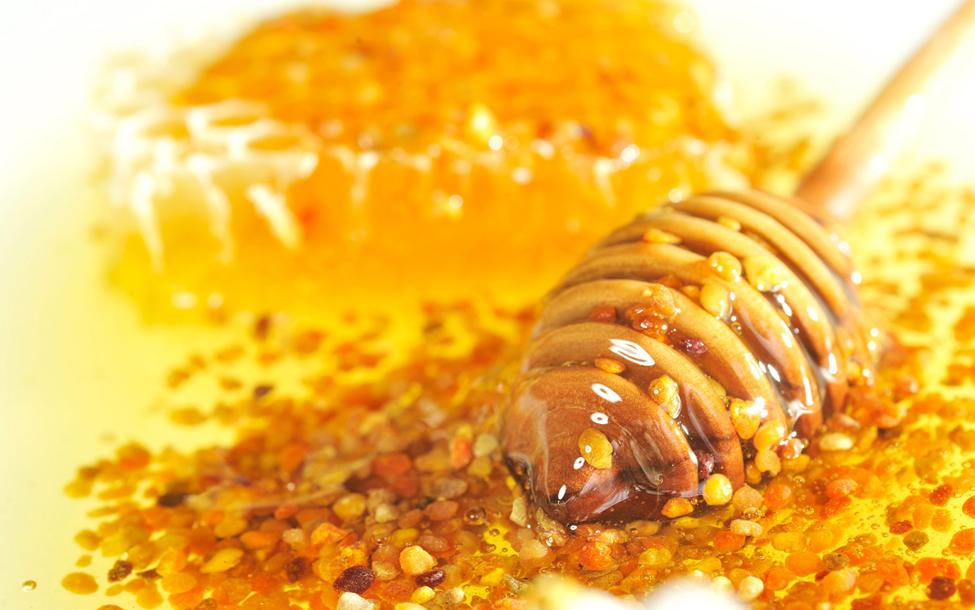
The presence of pollen in honey is also a fundamental cause of fermentation
4. Comprehensive Technical Comparison Matrix
Use this technical reference matrix to evaluate the condition of your honey:
| Evaluation Criteria | Aerated Honey (Mechanical) | Crystallized Honey (Physical) | Fermented Honey (Microbial Spoilage) |
|---|---|---|---|
| Surface Appearance | Fine, clear micro-bubbles at the neck | Opaque, grainy, butter-like crystals | Thick, frothy white foam layer |
| Bubble Behavior | Static, stationary, dissipates slowly | Solid or semi-solid grain structure | Actively rising bubbles, expanding foam |
| Gas Pressure | No hiss, no container swelling | No pressure buildup | Audible hiss, bulging cap, gas expansion |
| Aroma Profile | Pure floral, warm honey aroma | Characteristic honey aroma | Sharp sour, pungent vinegar, alcoholic stench |
| Flavor Profile | Sweet, clean, balanced natural finish | Rich, sweet, melt-in-mouth texture | Sour, acidic, bitter, burning aftertaste |
| Texture & Viscosity | Thick, smooth, uniform stream | Dense, fine crystals (14°C – 20°C) | Runny, watery, separated liquid layers |
| Safety Verdict | 100% Safe to consume | 100% Safe to consume | Unsafe raw — discard immediately |
Authoritative Standards Citation
"According to Codex Alimentarius Standard for Honey (Codex Stan 12-1981) and National Technical Regulation TCVN 5267:2008: Honey sold for direct human consumption shall not have any foreign flavor or odor absorbed during processing and storage, nor shall it have begun to ferment or effervesce. The moisture content of honey shall not exceed 20% (with an optimal processing benchmark below 18.5%), and the free acidity shall not exceed 50 milliequivalents of acid per 1000 grams. Honey exhibiting active effervescence and sour odor fails compliance criteria for direct table use."
🔗 Technical Reference: Joint FAO/WHO Food Standards Programme — Codex Stan 12-1981 & Vietnam Ministry of Science and Technology TCVN 5267:2008.
5. How Ivy Honey Eliminates Fermentation Spoilage
To protect commercial foodservice partners and health-conscious consumers from fermentation defects, Ivy Honey implements rigorous quality controls across the supply chain:
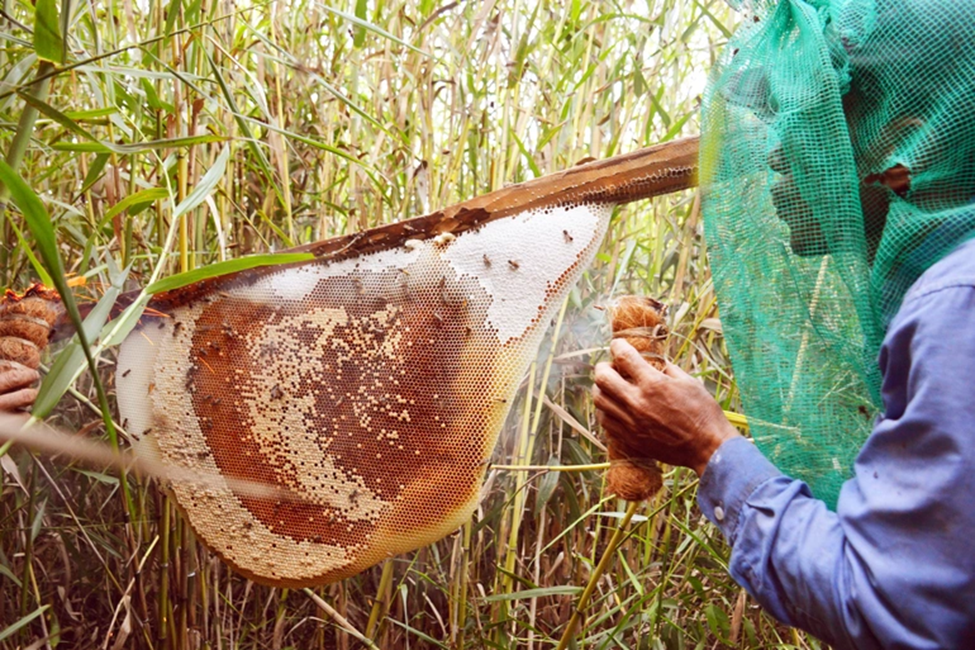
The flower source from which bees collect nectar influences the formation of gas bubbles in honey
5.1. Low-Temperature Vacuum Dehydration (< 18.5% Moisture)
Fresh honey harvested from regional apiaries often carries fluctuating moisture levels (20% – 24%). Ivy Honey routes raw honey through a closed low-temperature vacuum dehydration system:
- Moisture Controlled Below 18.5%: Dehydrating honey under vacuum at low temperatures (<42∘C< 42^\circ\text{C}) reduces moisture without thermal shock. At this moisture level, osmotic pressure completely halts Zygosaccharomyces yeast proliferation.
- Standardized 78° – 82° Brix: Guarantees uniform viscosity, preventing layer separation during long-term storage.
- Preserving Live Enzymes: Unlike conventional boiling, vacuum evaporation preserves heat-sensitive Diastase (≥8\ge 8 Schade) and Invertase enzymes intact.
5.2. Verified Product Portfolio
Ivy Honey operates three transparent, verified mono-floral and health-grade product lines:
- Gia Lai Coffee Blossom Honey: Sourced from the Central Highlands bazan red soil; amber tone, delicate coffee blossom aroma, sweet with a signature 0.57% natural gluconic acid mild crisp finish (not sour fermentation).
- Meo Vac Mint Blossom Honey (Ha Giang): Harvested during northern winter from wild mint flowers (Elsholtzia ciliata); translucent greenish-golden hue, delicate floral sweetness (free of synthetic menthol chill).
- Nano Curcumin Honey: Formulated with ultra-fine curcumin particles dispersed in vacuum-dehydrated honey, neutralizes turmeric bitterness and coats gastric mucosa gently.
5.3. Industrial B2B & Foodservice Packaging Standards
Exposure to humid ambient air causes honey to absorb water hygroscopically. Ivy Honey packages honey in airtight industrial formats:
- 1-Liter Pump Bottle: Designed for bar counter mixology, dispensing precise 5ml – 10ml shots per pump. The one-way valve prevents moisture and air ingress, keeping bar counter operations clean and waste-free.
- 25 kg Virgin HDPE Drums: Food-grade, airtight screw caps tailored for central kitchens, bakeries, and sauce manufacturers.
- 200 kg Industrial Drums: Epoxy-lined food-grade steel drums for large-scale beverage manufacturing and OEM export clients.
6. Proper Storage SOP to Prevent Honey Bubbling
Preventing uncontrolled gas and foaming requires four standard operating procedures (SOP):
- Store at Stable Room Temperature (21°C – 26°C / 70°F – 79°F): Store jars in a dry pantry away from direct sunlight, gas stoves, and ovens. Heat accelerates HMF formation and encourages fermentation in high-moisture honey.
- Never Store in the Refrigerator (5°C – 10°C): Chilling does not stop fermentation effectively and places honey right in the prime temperature range for rapid glucose crystallization.
- Reseal Airtight Immediately After Use: Honey is strongly hygroscopic. Leaving the cap off in humid kitchens causes honey to absorb atmospheric water vapor until surface moisture crosses the 20% danger line.
- How to Clear Mechanical Bubbles: If your honey developed surface bubbles from transport vibrations, place the sealed jar in a warm water bath at 40°C – 50°C (104°F – 122°F) for 15 to 20 minutes. The slight reduction in viscosity allows air bubbles to escape without damaging enzymes.
7. Conclusion
The widespread myth that fizzy honey proves authentic purity is debunked by physical biochemistry. True, mature natural honey harvested at peak ripeness naturally protects itself against microbial activity through high osmotic pressure and water content maintained strictly below 18.5%. By adhering to low-temperature vacuum dehydration, ISO 22000:2018 food safety standards, and airtight packaging, Ivy Honey eliminates fermentation risks at the source - delivering pure, stable, and bio-active floral honey that beverage professionals and discerning households can trust unconditionally.
Frequently Asked Questions (FAQ)
Can I boil fermented honey to kill the yeast and make it safe?
Boiling honey is strongly discouraged. While heating above 70°C kills yeast cells, high heat irreversibly destroys beneficial enzymes (diastase, invertase), degrades vitamins, and spikes Hydroxymethylfurfural (HMF) levels, resulting in a burnt, dark syrup devoid of nutritional value.
Why does my honey jar hiss when I open the cap?
An audible hiss indicates carbon dioxide gas CO2 pressure release caused by active yeast fermentation inside the jar. If accompanied by a pungent sour odor and white surface foam, the honey has soured.
Does real honey always produce bubbles when shaken?
Real honey will trap air bubbles when vigorously shaken due to its thick viscosity, but these bubbles will gradually dissipate after resting. Fake honey or thin glucose syrup will also trap bubbles if agitated. Shaking is not a reliable test for honey authenticity.
How does Ivy Honey prevent honey from fermenting during storage?
Ivy Honey utilizes low-temperature vacuum dehydration to reduce moisture strictly below 18.5%, maintaining 78° – 82° Brix. This low moisture level creates high osmotic pressure that naturally suppresses osmophilic yeasts without heat damage.